


Hair loss is a common concern that affects millions of people, but with modern advancements, it is no longer something you simply have to accept. If you have been researching effective treatments, you have likely wondered how long does finasteride take to work and what kind of progress you can expect to see.
At The Skin & Hair Clinic, we believe that understanding your treatment path is the first step toward achieving a fuller, healthier head of hair. While the journey requires patience, the scientific evidence supporting this medication is substantial for those dealing with androgenetic alopecia.
What is Finasteride?
To understand how the treatment works, it is important to first define what is finasteride and its role in hair restoration. Finasteride is an FDA-approved hair loss medication primarily used to treat male pattern baldness.
It belongs to a class of drugs known as 5-alpha reductase inhibitors. In the body, an enzyme called 5-alpha reductase converts testosterone into dihydrotestosterone (DHT). DHT is the hormone responsible for shrinking hair follicles in those genetically predisposed to hair loss, a process known as miniaturization.
By blocking this conversion, the medication lowers DHT levels in the scalp, which helps protect follicles and encourages healthier growth cycles. While finasteride 5mg is often prescribed for enlarged prostate issues, the standard finasteride 1mg dose is the most common for treating hair loss.
How long does Finasteride to work?
When starting a new regimen, the most frequent question is How long does Finasteride take to work before visible changes occur. Because hair growth is a slow, physiological process, you will not see results overnight. Generally, most users begin to notice a difference between three to six months of consistent daily use.
During the first few weeks, you may not see any change at all. In some cases, you might even experience a temporary increase in shedding. This is often a sign that the medication is working, as it pushes out old, thin hairs to make way for new, stronger strands. If you’re wondering how long does it take for finasteride to work or how long does finasteride take to work, by the six month mark, the finasteride results typically become more apparent as the hair at the crown and hairline begins to stabilize.
The Finasteride timeline: What to expect?
Month 1 to 3: The adjustment phase
In the first ninety days, the primary goal of the medication is to stop further loss. You may still see some thinning, but the DHT levels in your scalp are already beginning to drop. This is the period where most people ask does finasteride work because they cannot see new hair yet. Consistency with your finasteride dosage is crucial during this phase.
Month 3 to 6: Early signs of progress
This is usually when the “before” phase starts transitioning into the finasteride before and after results. You might notice that the hair you currently have feels slightly thicker, and the rate of shedding has slowed down significantly.
Month 6 to 12: Visible thickening
By the end of the first year, most men see a noticeable improvement. If you are wondering does finasteride regrow hair, the answer is often yes for many users, particularly in the crown area. While its main job is to prevent further loss, many patients experience significant regrowth of dormant follicles.
1 Year and beyond:
Maximum results
The full impact of finasteride hair loss treatment is usually reached at the 12 to 24 month mark. At this point, you are seeing the cumulative effect of several healthy hair growth cycles in the finasteride timeline.
Also Read – What Makes Advanced Hair Restoration Different from Traditional Methods?
Is Finasteride safe and what are the side effects?
Safety is a top priority for any patient at The Skin & Hair Clinic. So, is finasteride safe for long term use? For the vast majority of men, the answer is yes. It has been used for decades with a well documented safety profile. However, like any medication, there are potential finasteride side effects to be aware of, and many patients also ask how long does finasteride take to work before seeing noticeable results. A limited number of patients may report sexual adverse effects, including a reduction in libido or instances of erectile dysfunction.
In most cases, these symptoms resolve if the medication is discontinued. Other less common effects can include breast tenderness or skin rashes. It is essential to discuss your medical history with a specialist to ensure the treatment is right for you.
Finasteride for hair loss: Who can use it?
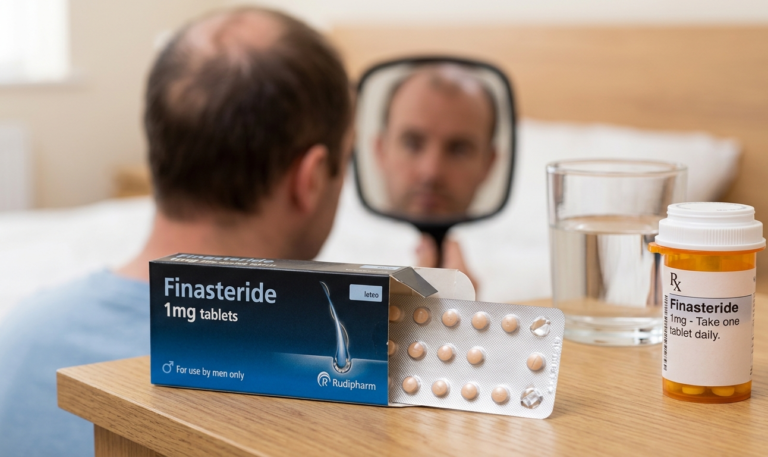
While it is a powerhouse for male pattern baldness, finasteride for women is handled differently. For women who may become pregnant, this medication is usually avoided to protect against the possibility of birth defects. However, in specific post menopausal cases or under strict medical supervision, it may be used for female-pattern hair loss.
The most common finasteride uses involve daily oral tablets. Whether you are using the brand name or generic versions, the goal remains the same: To regulate the hormonal environment of the scalp. For those with significant thinning, a specialist might suggest combining this hair loss medication with other treatments like minoxidil or PRP therapy for enhanced outcomes.
Maximizing your results
To get the most out of your treatment, follow these professional tips:
- Be consistent: Take your medication at the same time every day to keep hormone levels steady.
- Track your progress: Take photos every month to see the subtle changes in your finasteride results.
- Combine treatments: Consult with the experts at The Skin & Hair Clinic to see if a combination therapy is best for your specific hair type.
- Stay patient: Remember that hair grows about half an inch per month, give the medication time to work through the growth cycles.


Colombia vs Turkey Hair Transplant: Which Country Offers Better Results in 2026?
Colombia vs Turkey Hair Transplant: Which Country Offers Better Results

Hair Transplant Cost Colombia: Complete 2026 Pricing Guide
Hair Transplant Cost Colombia: Complete 2026 Pricing Guide Hair loss
Hair Transplant recovery: What to expect after your procedure
Hair Transplant recovery: What to expect after your procedure At
Quick Enquiry
What does Finasteride do for the long term?
If you stop taking the medication, the DHT levels will return to their previous state, and the hair loss process will resume. Therefore, what does finasteride do effectively is provide a long term management solution for a chronic condition, and understanding how long does finasteride take to work is key to setting realistic expectations. It is a commitment to maintaining your hair’s health and density for years to come.
The journey to hair restoration is a marathon, not a sprint. While the question of how long does finasteride take to work has a clinical answer of three to six months, the emotional reward of seeing your hair stabilize and regrow often lasts much longer.
If you are ready to take control of your hair loss, the team at The Skin & Hair Clinic is here to guide you through every step of the finasteride for hair loss process. Book an appointment now.
FAQ's On How long does it take for finasteride to work
Finasteride begins blocking the production of dihydrotestosterone (DHT) almost immediately after you start taking it. However, because hair grows slowly, you typically won’t see visible changes in hair density or growth for at least 3 to 6 months, which explains how long does it take for finasteride to work and how long does finasteride take to work.
While initial changes appear within the first few months, understanding how long does finasteride take to work, the most significant improvements in hair count and thickness are generally observed after 12 months of daily, consistent use.
Yes. Some users experience “finasteride shedding” during the first few weeks of treatment. This occurs because the medication accelerates the resting phase of older hairs to make room for new, healthier hair follicles to grow.
Finasteride is a long-term commitment. If you stop taking the medication, the DHT levels in your body will rise again, and the hair you kept or regrew will likely fall out within 6 to 12 months, reverting to your original pattern of hair loss.
Finasteride is most effective at slowing down hair loss and thickening existing hair. While it can stimulate regrowth in areas where follicles are still active, it is unlikely to regrow hair in areas where the scalp has been completely bald for many years.
You can take finasteride at any time of day, with or without food. The most important factor is consistency; you should aim to take it at the same time every day to keep a steady level of the medication in your system, especially if you’re wondering how long does finasteride take to work.
Clinical studies show that finasteride is effective for the majority of men (roughly 80% to 90%) in stopping or slowing hair loss. However, its effectiveness can vary depending on the stage of hair loss at which treatment begins.
The results are only maintained as long as the medication is taken. It does not “cure” male pattern baldness; it manages the condition by suppressing the hormones that cause it, answering how long does finasteride take to work.
No. Taking more than the recommended 1mg dose (for hair loss) does not make hair grow faster or thicker, but it may increase the risk of experiencing side effects. Always follow the dosage prescribed by your healthcare provider.
Finasteride is primarily approved for use in men. It is generally not recommended for women, particularly those of childbearing age, as it can cause serious birth defects if a woman becomes pregnant while using it.