


Hair loss can feel frustrating and emotionally exhausting, which is why many people today explore advanced hair restoration procedures. At Skin-Hair Clinic, patients often ask about DHI vs FUE and which treatment delivers better, more natural-looking results. While both methods are highly effective, understanding the key differences between DHI vs FUE hair transplant procedures, including recovery, cost, benefits, and overall effectiveness, can help patients choose the procedure that best suits their hair goals, scalp condition, and budget.
What is a DHI hair transplant?
One of the most common questions patients ask at Skin-Hair Clinic is, ” What is DHI hair transplant and how does it differ from traditional methods?
DHI, or Direct Hair Implantation, is an advanced hair transplant technique derived from FUE technology. During the procedure, experts at Skin-Hair clinic take individual hair follicles from the donor area and place them directly into the scalp using a specialized Choi implant pen.
Unlike conventional methods, DHI allows surgeons to create channels and implant grafts simultaneously. This provides greater precision, improved density, and more control over how and in which direction your hair grows.
For anyone wondering what is DHI, it is essentially a minimally invasive hair restoration procedure designed to create natural-looking and dense results with minimal downtime.
Benefits of DHI hair transplant
- Precise hair implantation
- Natural hairline design
- Minimal scarring and bleeding
- Faster healing process
- Reduced trauma to the scalp
- Higher graft survival rates
What is a FUE hair transplant?
Follicular Unit Extraction (FUE) is one of the most common hair transplant procedures worldwide. In this method, doctors remove individual hair follicles from the donor area and place them into small incisions in the scalp.
When comparing FUE vs DHI hair transplant, FUE is often recommended for patients with larger areas of hair loss because it allows more grafts to be transplanted in a single session.
Benefits of FUE hair transplant
- Minimally invasive technique
- No visible linear scar
- Ideal for larger bald areas
- Faster healing than FUT
- Natural-looking results
- More affordable than DHI
DHI vs FUE hair transplant: Key differences

Patients researching DHI vs. FUE hair transplant procedures often want to know how these treatments differ in terms of results, recovery, and cost.
Implantation Method | Choi Implant Pen | Forceps with channel creation |
Precision | Very High | High |
Recovery Time | Faster | Moderate |
Scarring | Minimal | Minimal |
Procedure Duration | Longer | Shorter |
Cost | Higher | More budget-friendly |
Best For | Hairline density | Larger coverage areas |
At Skin-Hair Clinic, specialists recommend the best option based on each person’s hair loss pattern and their goals.
FUE vs DHI: which is better?

A question many patients ask is: FUE vs. DHI, which is better?
The answer depends entirely on the patient’s goals and the extent of hair loss.
DHI may be better if:
- Maximum density is the priority
- Precise hairline correction is needed
- The treatment area is smaller
- Faster healing is preferred
FUE may be better if:
- Hair loss is extensive
- A larger number of grafts is needed
- Budget is an important factor
- Shorter procedure time is preferred
When deciding between DHI and FUE, a consultation with an experienced hair transplant specialist at a Skin-Hair clinic is essential.
Also Read – How Long Do Hair Transplants Last?
Sapphire FUE vs DHI
Another comparison patients frequently ask about is sapphire FUE vs DHI.
Sapphire FUE is an upgraded version of traditional FUE, in which sapphire blades are used to create recipient channels. These blades allow:
- Smaller incisions
- Faster healing
- Reduced tissue damage
- Improved graft placement
When comparing sapphire FUE vs DHI, DHI offers greater implantation precision, while sapphire FUE is often preferred for larger treatment areas.
FUE vs FUT vs DHI
Patients also compare FUE, FUT, and DHI before selecting a hair restoration treatment.
FUT
- This method requires removing a strip of scalp.
- It usually leaves a linear scar.
- It is suitable for procedures that need a large number of grafts.
FUE
- Removes hair follicles one at a time
- Does not leave a straight scar
- Is a gentler option compared to FUT
DHI
- This is an improved method based on FUE.
- It uses a direct implantation technique.
- This approach allows for more precise placement and higher hair density.
Among FUE vs FUT, vs DHI, DHI is often considered the most advanced approach, though it can also be the most expensive.
DHI vs FUE: Cost consideration
Many patients researching DHI vs. FUE cost wonder why DHI procedures generally cost more.
Factors affecting cost are:
- How many grafts will you need
- The experience of your surgeon
- The type of technology used in the procedure
- How long will the procedure take
- The reputation of the clinic
The DHI hair transplant cost is typically higher because it requires advanced tools, specialized expertise, and longer implantation time.
FUE, on the other hand, is usually more affordable while still delivering excellent long-term results.
Recovery after DHI and FUE
Both DHI and FUE are minimally invasive procedures with relatively quick recovery periods.
Typical recovery timeline
- Mild swelling and redness: 2–5 days
- Scab shedding: 1–2 weeks
- Temporary shedding phase: 2–6 weeks
- Visible new hair growth: 3–4 months
- Final results: 12–18 months
Patients undergoing DHI may experience slightly faster healing because of reduced scalp trauma.
Why choose Skin-Hair Clinic
At Skin-Hair Clinic, our team of experts provides hair restoration using advanced DHI and FUE transplant techniques for natural, lasting results. No matter if you choose FUE or DHI, you’ll get care designed just for you, aiming for full, natural-looking hair with little downtime and precise results. We bring together:
- Experienced Specialists
Our experienced specialists perform DHI, FUE, and Sapphire FUE procedures with great care and a high rate of graft success.
- Advanced Technology
We use advanced minimally invasive techniques to help you recover more safely and quickly.
- Personalized Care
We create treatment plans that match your unique hair loss pattern and personal goals.
- Natural Results
By choosing the right method, whether FUE or DHI, we make sure your hair looks natural in density, direction, and hairline design.
- Complete Care
We provide complete hair and skin care in one place to support your overall scalp health.
- Safe Approach
Our hygienic procedures and expert advice help you confidently decide whether DHI or FUE is the best option for you.


Colombia vs Turkey Hair Transplant: Which Country Offers Better Results in 2026?
Colombia vs Turkey Hair Transplant: Which Country Offers Better Results

Hair Transplant Cost Colombia: Complete 2026 Pricing Guide
Hair Transplant Cost Colombia: Complete 2026 Pricing Guide Hair loss
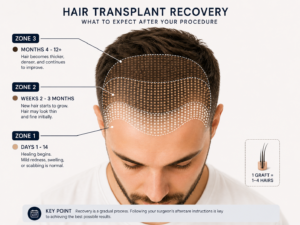
Hair Transplant recovery: What to expect after your procedure
Hair Transplant recovery: What to expect after your procedure At
Quick Enquiry
Start your hair regrowth journey with Skin-Hair Clinic
Deciding between DHI and FUE comes down to your hair restoration goals, how much density you want, the extent of your hair loss, and your budget. DHI provides greater precision and a denser hair placement, while FUE remains very effective and usually costs less to treat larger areas.
Patients are still unsure about DHI vs FUE hair transplant which is better. Find out which option is best. It is a good idea to talk to the experienced specialists at Skin-Hair Clinic. They can offer advice and create a treatment plan tailored to your needs.
The main difference between DHI and FUE is how the hair is implanted.
Both procedures use local anesthesia, and most people tolerate them well.
Yes, the DHI hair transplant cost is usually higher due to advanced technology.
DHI is often chosen by people who want fuller-looking results.
The best option depends on your individual needs and hair loss pattern when comparing DHI vs FUE.
In the DHI vs FUE comparison, DHI may heal a bit faster because it causes less scalp trauma.
Yes, both procedures are suitable for men and women.
Both treatments usually give long-lasting, often permanent results.
DHI has a high success rate, especially when performed by experienced professionals.
The best way to decide between FUE vs DHI is to have a consultation with a specialist.